
Cat sitter instructions: a checklist for a neighbor’s visit
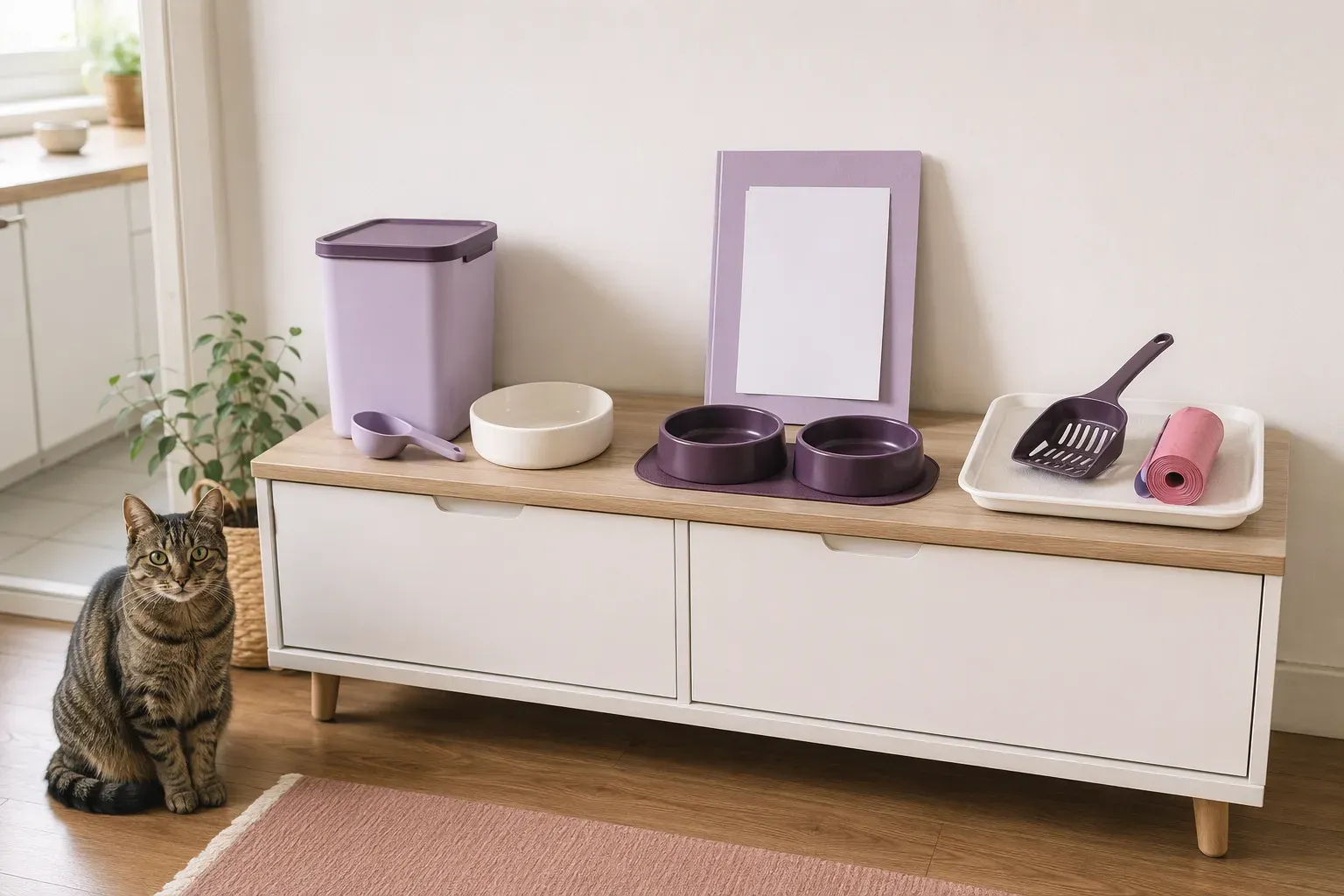
Cat sitter instructions should tell your helper when to visit, exactly what to feed, where to refresh water, how to clean the litter box, and who to contact if something goes wrong. Leave a written copy at home and send the same note privately before the visit. For a neighbor helping out, confirm access and a backup plan too—not just the food routine.
What should cat sitter instructions include?
A useful cat sitter checklist covers the visit time, each cat’s routine, the locations of supplies, entry and exit instructions, and emergency contacts. Write quantities and locations rather than “feed as usual” or “everything is in the kitchen.” Your helper should be able to follow the note without guessing.
The PDSA cat-sitter checklist includes food, daily water-bowl washing and refilling, litter cleaning, medication instructions and indoor/outdoor rules. Use those categories as the basics, then add the details of your own home.
- Time: Each visit’s date and agreed arrival window, plus any care that must happen at a particular time.
- Food: Which cat gets which food, amount per meal, bowl location and where food is stored. Include separate feeding arrangements for multiple cats.
- Water: Every bowl or fountain location and the cleaning/refilling routine. Demonstrate a fountain if your helper will need to operate it.
- Litter: Every tray’s location, when to scoop, where the scoop and bags are, and where waste goes.
- Cat and home: Names, how to tell cats apart, usual hiding spots, and doors or windows that must remain closed.
- Contacts: Your number, a local backup, regular vet and after-hours clinic details, plus carrier location.
For medication or a special diet, leave the vet’s exact instructions and check that the helper can follow them. Don’t turn a medical care requirement into a casual feeding request.
Copy this care note and fill in the blanks
Send this privately to the person who has agreed to help. Keep the completed copy near the supplies, but don’t put an entry code on a note visible from outside.
Cat-care note
Cat name(s) and identifying features: [ ]
Visit date(s) and arrival window(s): [ ]
Time-sensitive care, if any: [ ]
Food: Give [cat] [amount and units] of [food] at [time]. Food is in [location]; use [scoop/measure]. Feed in [place]. Treats or foods to avoid: [ ].
Water: Bowls/fountain are in [locations]. Please [washing and refill instructions].
Litter: Trays are in [locations]. Please [scooping routine]. Scoop, bags and spare litter are in [location]. Waste goes in [bin].
Cat check: Usual hiding places: [ ]. Please check by [agreed method]; don’t chase or pull the cat out.
Home rules: Keep [doors/windows] closed. Before leaving, check [ ].
Health: Conditions or medication: [none / attach exact vet instructions]. Contact plan if something seems wrong: [ ].
Contacts: Me [number]; local backup [name/number]; vet [name/number/address]; after-hours clinic [name/number/address]. Carrier is in [location]. Emergency treatment authorization arrangements: [ ].
Update: Send [message/photo] via [channel] after each visit. Tell me what was done, whether you saw the cat, and anything unusual.
Access: Agreed privately with [helper]. If entry fails, contact [person/number].
Example: turn “feed Luna on Saturday” into a clear visit
Here’s a fictional example for a cat whose parent has already chosen the meal amount. It’s not a feeding recommendation for other cats.
Saturday, 6–7 pm: give Luna one 85 g pouch of her usual wet food in the white kitchen bowl. Pouches are in the top cupboard beside the fridge. No extra food or treats. Wash and refill both water bowls: one in the kitchen, one beside the bedroom door. Scoop the bathroom litter tray; scoop and waste bags are in the bathroom cupboard, and tied bags go in the designated waste bin. Luna may be behind the sofa—check quietly without pulling her out. Keep the balcony door shut. Message me after the visit with what you completed and whether you saw her.
The final handoff also needs real contact numbers, an entry plan and emergency instructions. If you’ll be away for several days, list every visit separately so neither person assumes one visit covers the whole trip.
Walk through the routine before you leave
- Show the supplies. Group food with its measure, keep water equipment easy to find, and put litter tools together in a separate area. Use clear labels if different cats have different food.
- Try the entry plan together. Check the key or agreed access method, building entry and how to lock up. In an apartment community, agree on any visitor-entry steps too.
- Demonstrate anything unfamiliar. Show the fountain, separate feeding areas or medication routine. Ask the helper to explain the steps back so you can catch unclear wording.
- Agree on missed-visit and emergency plans. Choose who takes over if the helper can’t come, and what they should do if they can’t reach you. A time-critical care need needs a backup who can actually attend.
- Confirm the arrangement. Make sure the helper accepts every visit time and task. Agree on any payment or exchange directly rather than assuming what “help” means.
The American Animal Hospital Association’s sitter-instructions guidance also recommends specifying meal amounts, medication timing, supply locations and emergency contacts. A walkthrough makes those written details easier to use.
Keep the public ask short and the private handoff complete
A neighborhood request only needs the care task, date, time and general area. For example: “Need help feeding one cat and refreshing water on Saturday, 6–7 pm, in my Bangalore apartment community.” Keep your exact address, travel itinerary, entry code, phone numbers and full care note out of public posts.
If you’re looking for a nearby connection, Mewtual’s Bangalore needs page lets you browse by neighborhood or apartment community and time. Mewtual is a neighbor-to-neighbor cat-care app, not a professional sitter directory; helpers aren’t screened and help isn’t guaranteed. Get to know the person, confirm the care and access details, and keep a backup before relying on the arrangement.